Dreaming big in Lockhart

Last week I spent a day dreaming in Lockhart as part of Dream Big, the Riverina conference dedicated to developing the arts in the region. It was organised by Eastern Riverina Arts and Western Riverina Arts. The latter, I should note, currently employ me.


The event's debut in Narrandera last year focused on festivals, with talks from artists, organisers and administrators. This year the focus was on public art.


After a welcome from Eastern Riverina Arts' Scott Howie, a welcome to country by Mark Saddler and another welcome from Lockhart Shire general manager Rod Shaw, renowned artist Fiona Foley presented the keynote address.


Foley discussed her formative experiences as an artist, beginning with an introduction to books on Australian Aboriginal history since European settlement that had influenced her. She recalled a critique of her graduating work while at the Sydney College of the Arts, a response to massacres at Queensland's Hervey Bay.

She mentioned criticisms from fellow students led to the development of self-belief in her work when the piece was bought by the National Museum of Australia. From here she skipped ahead to the 2009-10 retrospective held at the Melbourne Museum of Contemporary Art, which included work reflecting on the John Batman treaty that saw the Wurundjeri people transfer 600 acres of land where Melbourne now stands.

Foley said history texts provided the ideas she "crystallised in sculpture". Her work Dispersed was shown as an example, the letter D covered in bullets to comment on the euphemistic use of the word to describe the killing and displacement of indigenous Australians. (Image below courtesy of the artist.)


She outlined the process of developing and installing Witness To Silence, explaining the use of secrecy and subterfuge to see the work installed outside the Brisbane Magistrates Court.

In her initial statement she claimed it would memorialise fires and floods in Queensland townships. Three months after it was unveiled she revealed the 94 sites referenced within it were sites where massacres of Aboriginal people were known to have occurred.

"I like to put hidden histories into the public arena," Foley explained before discussing her works in the Queensland State Library which drew on the history of opium in the state. Her research found the little town of Marborough had three opium dens in the main street during the 19th Century. "Why? Because [the government of the day] wanted a cheap workforce," she claimed. (Image below courtesy of the artist.)


Similarly, Foley's $1.5 million commission in Mackay took inspiration from history. Her brief had been to enhance the river as the city had turned away from it. She researched the South Sea Islander workforce that had been imported to work in the canefields and developed sculptures based on sugarcubes. These featured the names of boats that had brought this human cargo as well as thumbprints from their descendants.

The local council were not impressed and a compromise was required for the project to proceed, where names of boats not involved in this trade were included. Foley said some of the councillors were descendants of the sugar farmers.

It was a provocative and interesting talk. One which Scott Howie said provided a "clear indication of the power of public art".


Wendy Hee, Cultural Development Officer with Waverley Council, introduced her talk on the economic benefits of public art with the well-known statue of the Dog on the Tuckerbox that is sited outside Gundagai. She outlined how this iconic piece stops traffic and creates jobs, although acknowledging the area has undergone some changes in recent years.

"Why have a park bench when you can have a work of art?" she asked, outlining pieces such as a mosaic bench that celebrates the meeting of the Bondi Life Saving Club in Gaza during the second world war.

"Public art commissions generate an economy of their own," she argued while outlining the materials and transport costs that feed into local economies. These activities can also serve to educate communities, such as Port Macquarie works that were funded by the State Emergency Service. "They walk passed it every day, so that reinforces the message" about flood markers.

Another example was an airport work that had been funded through a grant for security improvements. She described the process of the artist liaising with council staff in many departments.

"It's probably cheaper to be beautiful" said Wendy, contrasting the costs of buying council assets out of a catalogue versus employing artists to develop original works for the purpose.

Waverley Council are known for their annual Sculpture by the Sea event, which estimated to attract 1.5 million people over three weekends.

Local artist Vic McEwan asked a question about the process and whether friction between varying interests can create better results. Wendy replied that it was important to overcome resistance and fear with information.

Fiona Foley argued that it's important to maintain cultural integrity to the site. "It's an indictment on Australian society if we can't promote our own culture," she said. "We need to stop giving priority to overseas artists and start cultivating our own."

Wendy Hee concluded "It'd be a really good start for local councils to have a public art policy".


Wagga Wagga City Council Cultural Development Officer Tracie Miller spoke on her work in incorporating public art into planning processes, so that it's not just plonked down at the end.

She mentioned the challenges faced by the city due to rapid growth so the urban sprawl retains a sense of personality. "Public art fails not from negativity but from indifference" is a quote I've recorded but am not sure now whether she said it or quoted it.


One artist Tracie is working with is Col Henry, who has recently been awarded a commission for the city airport. "Public art requires all sorts of conversations," he said. "Everyone loves it -- especially after a year," he joked but acknowledged that installation can be "an intensive process".

"Everyone is an artist. My role is to get into people's heads so their ideas can be realised," said Col. I recall Fiona Foley argued against this statement, saying that everyone has opinions but that doesn't necessarily lead to good art.

I was heartened that Col recognised that creativity isn't limited to a job description because I think everyone should embrace art for the rewards it can bring. However, I can see for an artist like Foley that compromise dilutes the power of her work.


Penny Davies from Southwest Arts spoke on the Growing Our Place sculpture trail. "We wanted to nurture and support our local government areas to feel confident incorporating art into their works." She said that project management required being clear with councils and communities about the process and outcomes, outlining how a popular vote helped ensure support while councils auspiced their projects and participated in their commissioning.


John Wood was one artist involved in this project but he spoke more generally about his sculpture and experiences. "Making the break into public art can be a slow and deflating process but persevere," John said. "Remember it's a competitive process, so give it your best shot and it gets easier [to write proposals] the more you do."

"Research the brief and take time to talk to locals," he continued. "Have a realistic budget and timeframe."

Public art, John believes, gives a community a sense of place but he encouraged the use of interpretive panels to help them understand a piece. "Feedback is very useful to an artist," he concluded.


Ursula Jones, Tourism and Economic Development Officer at Lockhart Shire Council, spoke on the Spirit of the Land Festival which began in 2007 as a way of creating activity for farmers as "a distraction from the drought". The $10,000 acquisitive prize has the title National Farm Art Award and in 2013 it becomes a non-acquisitive prize to open the Festival to a wider group of artists. The event brings 5000 people each day.

Scott Howie spoke on the Animals on Bikes sculpture trail between Orange and Dubbo. 111 sculptures have been placed along roadsides to encourage tourism. "They're coming together to promote their towns and drive the dollar through," he said.
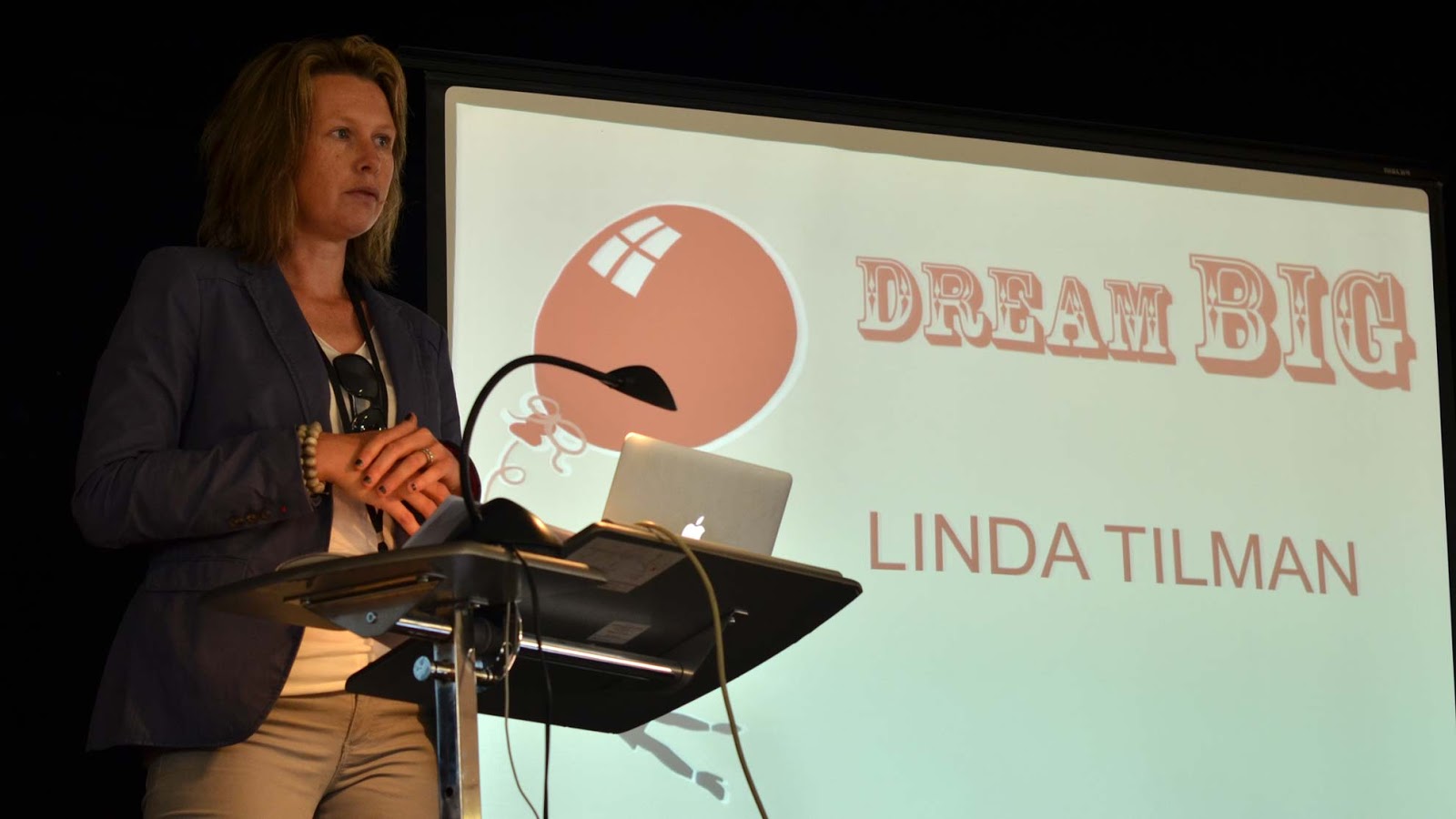

Linda Tillman from Riverina Regional Tourism spoke on their plan, which includes cultural tourism, as well as funding available through Destination NSW. The latter hopes to double overnight visitation but seemed to raise the bar in terms of accessibility with a requirement to have a minimum of $50,000 to access dollar-for-dollar funding from the State.

"They want to see local governments and industry working together to promote regional NSW," she said. Scott Howie observed this means promotional activities "become more sustainable because everyone has invested more into them" but I'd guess it'll exclude many smaller councils unless they work together across a region.

The final part of the Dream Big conference was called Wisdom of the Crowd and invited local artists to pitch their dreams for audience comments.


Andrew Whitehead, a sculptor from Urana who had won the Spirit of the Land Festival a number of times, spoke first on his idea for a trail of his work through the region.

This would be akin to a solo show for an artist and Andrew argued he had a "proven track record in delivering popular art works". Col Henry suggested he should consider inviting other artists to be included, which lead to discussion of whether diversity or consistency would be selling points.


Vic McEwan of The CAD Factory spoke on his work rather than pitching a dream. "Art is about finding truths about ourselves" and "breaking down hierarchies," he said. The CAD Factory focus on creating temporary artworks with a view to embedding memories into the landscape which will encourage audiences to daydream. "There's poetry in all things," Vic concluded.


Poetry is the focus of Derek Motion's work and he talked on a project developed with Vic when they worked at Booranga Writers Centre and Wagga Wagga City Council respectively. Together they solicited poetry for installation in bus shelters. Derek said the "key thing isn't money" when developing art projects in local government, "it's a go-to person who will argue the case". He outlined his dream to project poetry onto the banks of the Murrumbidgee River.

The conference was an engaging event with interesting speakers talking on a variety of projects from their perspectives as artists and project managers. One of the highlights was the opportunity to network and I met a great range of people with whom I hope to develop art in the future.

Reimagining the Murrumbidgee


Here are excerpts from a recording that will accompany an exhibition called Reimagining the Murrumbidgee, which opens in Leeton this December.

I was excited to be involved in this project as I've lived near this river most of my life, from being born on the tributary Molonglo River at Lake Burley Griffin in Canberra and then moving to Wagga Wagga and now Leeton in the Murrumbidgee Irrigation Area.

On average the body of an adult human being contains 60% water. Since I've been drinking water from this river and its tributaries pretty much all my life, the Murrumbidgee is a significant part of me.

Dicks and boobs on Facebook


Amazed to see this phallus appearing in my Facebook newsfeed this week in various advertisements. They really need to improve their processes when approving sponsored content.

It's interesting to consider the impact Facebook is having on the way people consume information. So many people visit the site each day that it has overtaken every other form of media in Australia, reaching more viewers than television or radio.

I wonder how it may influence perception of the events reported within it.

Consider this screenshot below and how the appreciation for breasts in one post creates a different context for viewing the image in the news story below it.

Imagine if Head Chef's penis pic had appeared above an image of a child eating a sausage?

Bikini skill


Love seeing my work remixed. This illustration of Kathleen Hanna is by Sara Stode of Sweden. Original pic can be seen at First Three Songs, No Flash -- a blog of gig pics that I've been meaning to update.

Star Wars Downunder

Phoenix collage for Burning Seed


My Partner Jo made this awesome collage to promote Burning Seed 2013. During August it can be seen in the window of Western Riverina Arts' Leeton office, where I work part-time.

Hello Big Brother


Ever thought it'd be great if political parties kept a database of your personal details?

Well, brace yourself, THEY DO!

My local member kindly offered to collect my information with this taxpayer-funded pamphlet containing a form to be added to their taxpayer-funded database, which is exempt from the Privacy Act -- so I'll never know how much they know!

Thanks to Crikey for illuminating me

P.S. Great to see a petition seeking to change this blight on our democracy! 

Grong Grong Creative House

Motor inns are a common sight beside Australian roads, providing a private space for the public. Often experienced as an escape from driving, a retreat for visitors in a town they've just entered. Different heads dreaming on the same pillows each night, sharing in common their basic human needs.


In recent years The CAD Factory have identified various sites in the Riverina to provide venues for events. Each occasion has revealed a new way of experiencing the location, taking the familiar and infusing it with colour and sound and surprising audiences.

The Grong Grong Creative House drew together a diverse group of artists to collaborate with each other and their hosts, proprietors John and Sandra Kooper.

At the driveway to the Motor Inn was hung a screen onto which was projected images of the local railway station. Inside were a few fires and food and snacks, from tea and cupcakes to a soft-serve ice-cream and also a hearty beef and vegetable stew. Soon after Vic McEwan welcomed the audience, the rooms were opened for jostling crowds to experience.

In room number one, Her Riot (Sarah McEwan) presented a song with video film clip and copies of her manifesto. The programme encouraged viewers to get comfortable on the bed and "think about how nice it is lying in bed and watching Rage on a Saturday or Sunday morning".


In room number three, Julie Montgarrett had curated a diverse collection of objects and works. The walls featured prints with charcoal-like textures and then evolving shapes of paper, moving from tree roots to flowing squiggles that ended in the image of a sailing ship like one of the First Fleet -- evoking earlier travellers.

The centre of the room stole the show. A small round table cluttered with objects was patrolled by an inward-facing light. This arrangement added movement and mysterious shadows to the walls of the room, projecting bold dark shapes. The effect mimicked passing headlights, bringing to mind many sleepless nights watching an indiscriminate selection of silhouettes from the surrounding landscape intrude on attempts to rest.


Room number six was one of the most popular, judging by the crowd in the room and comments from visitors. Inside Clytie Smith had curated an impressive array debris to form a Grong Grong Museum, accompanied by a request for assistance in identifying and labelling these contents.

The result was a outpouring of wry and witty crowdsourced captions, among the absurd and whimsical stories that were already included on the walls. And if the interaction didn't stir an immediate response, there were a number of installations hanging from the ceiling featuring stones suspended above lit glass bottles with some beautifully shiny screws.


Meanwhile back in the carpark, a performance by Vic McEwan featured clarinet accompanied by a prepared car trailer, whose tapped and bowed sounds were looped as a rhythmic backing. On the opposite side of the courtyard were a pair of headphones next to a seat, where listeners could hear the sounds of a downpipe flushed with rain flowing frog-like noises and something approximating a possessed cello.


Room number seven held a typewriter, an illuminated piece of prose and pages of typed contributions. Many said they were menus but the contents were not prepared meals, more like chewed sentences. This collaboration between Darrin Baker and Vic McEwan encouraged confession and brought a sentimental clank of letters being stamped onto paper without the chance to undo. "Our mistakes make us, they are often better than our victories" said the programme.


Inside room nine was a short play for a puppet created by Scott Howie, who said nothing as he set a record playing and brought a small figure to life on the television. The song told of loneliness and, combined with minimal lighting, created an ambience that transported the small audiences who gathered every 15 minutes through the evening.

It was interesting to see how effective this worked for different age groups, children at the front of the room captivated by the toy-like figure while adults standing at the back absorbed the lyrics.


Room number ten shared themes with the neighbouring room in a video installation which brought to light the dreams and fears of a travelling salesman. The hotel room his refuge, the bed leading into a video screen showing a figure in slumber as images from another era came and went. A monologue revealed the acute sense of loss in hearing children's voices asking for their absent father.

These last two rooms really caught my experience of visiting a motor inn and it was stirring to read the origins of the video of Howie, which hung in the window between nine and 10:
Shower (is it still raining? i haven’t noticed) is a 6:48 video work that requires the viewer to accompany the image with la vie en rose played on a small music box mechanism.  the title references a  line of dialogue that andi mcdowell says to hugh grant at the end of four weddings and a funeral. this piece might be about missing people you love.
The video is an excerpt of a 24-minute performance recorded earlier in the week, which is also entertaining for this sequence in which Howie remembers his phone is in his pocket:


The CAD Factory's Grong Grong Creative House excelled in presenting disparate yet boldly creative installations and performances. Many of the works drew on the intersection of public and private and it was an excellent showcase for diverse artists working in a multitude of mediums.


Furthermore, The CAD Factory's blog is a good read. See http://cadresidency.wordpress.com/category/grong-grong-creative-house/

Literacy

Headlines like 'Literacy' are begging for a simple typo like a missing apostrophe -- especially in my child's homework :)

Hand signals are dangerous


Alcoholic ginger beer

Winter leads me to drink.

In previous years I've found myself buying stout but lately I've been looking over the ciders that have replaced beer on the shelves at my Woolies.

I bought an alcoholic ginger beer called Frank's because it said it had a genuine flavour. Turned out the flavour was beer with some ginger syrup. There was another brand with a redheaded bloke on the label which also seemed to be gingered beer.

So I started looking very carefully at the labels and found this one called John Hollows to be a proper alcoholic ginger beer. Which may be why they say to be wary of imitations on the label, which calls their recipe 'botanical'.

The flavour balances sweet and dry and I found it to be very moorish but the sugar content felt like one was enough.

Sky is the limit at the Hydro

Exhibition of Leeton artists opened last night at the Hyrdo Hotel. Pictured here is one of Ivanka Jakopec's dreamy paintings.

Also showing were Peter Kopilow, Ann Rayment, Vita Vitelli and Noel Forbes. Clouds gathered in many of the works, which were interesting to contrast brushstrokes and style.

Trent Light exhibition


Trent Light's exhibition Visions of Theirs and Mine opened in Narrandera last night and showed his talent for portraiture, as well as raising questions about tourism and the representation of Fiji in holiday pics.

It's a refreshing look at Fiji that goes beyond travel photography. The works cleverly hung to split the gallery with contrasting perspectives.

On one wall were Light's portraits of Fijians, often in domestic or suburban settings but also in schools and nature. Use of fill lighting added a sense of glamour that brought radiance to faces and subdued the settings, pushing the litter and basic utilities into the background.

On the other wall hung pictures taken by Fijian school kids when Light had handed out a dozen disposable cameras. While there were a number of blurry digits and a few feet, there were faces smiling in ways that can be challenge for a photographer to inspire and capture yet is effortless for kids shooting pics of each other.

Once again I found myself poring over details in the edges of the frames, looking at the school yard and the teachers and the visiting students -- some of whom were also looking at the exhibition at that time, leading to a couple of disorienting moments.

Light's skill as a photographer stands out when contrasted against the 'selfless' and happy snaps of kids but I think his skill as an artist shines in presenting these contrasting perspectives.

The idea of getting beyond glossy brochure images of the country's resorts was a great step but the idea of also collecting images from the people being photographed shows a level of consciousness about the craft.

Black leather jacket


Last week I had a few minutes to kill on the main street of town and went into St Vinnies.

There was a black leather jacket that wasn't too daggy and I've been looking for one in secondhand stores for years. At first glance I knew it wasn't my size and, I was just about to walk away disappointed that I'm yet to find a black leather jacket for me, then I remembered my son could use a decent coat.

So I bought it and took it home and it was a little big for my nearly 10-year old but he hasn't stopped wearing it for days. On a a few nights I've had to make sure he wasn't going to sleep in it.

I'd joked to the staff at Vinnies that it had a good style that wasn't too dated and that I hoped it'd give my eldest some style. He's commented a couple of times that wearing it makes him feel cool.

Seeing him in an old leather jacket reminded me of the leather jacket I bought secondhand from an opp shop decades ago. As I looked at him I began to see how he might look a bit older and then I couldn't help but see myself, so it was probably all projection.

A slow and agonising death

Another reminder of how we're witnessing the death of literacy.

Pots of gold indeed


Despite some gentle ribbing from mates for appearing to be adopting 'New Age' beliefs, I'm really enjoying this crystal hung outside my north-facing window for the occasional rainbows projected indoors.

Hardenbergia blossoms


Lovely to see the hardenbergia in the garden has started to flower. A few others haven't survived but this one is climbing up neighbouring plants to reach for the sun.

What would Jesus wear?

Hooded jumpers should be part of school uniforms for the practical reason that they keep people warm. Having a hood to pull over your head helps trap bodyheat very effectively, particularly through covering the back of the neck as well as the head.

Robes with hoods have been part of fashion for a very long time. I've seen pictures of Jesus where he appears to be wearing some sort of proto-hoodie, which must be a persuasive argument given the number of people who display the motto 'What Would Jesus Do?'

When I was working in local government, where the fashions are extremely conservative, I relished the opportunity to add a sombre grey hoodie to my slacks and shirt uniform. However, the humble hoodie needs better PR. Images of rioters often show them worn for anonymity. Scenes like those from the 2011 riot in London have probably harmed the advancement and acceptance of hoodies.

Hoodies are great and should be embraced by everyone but particularly they should be part of school uniforms as they are practical, unisex, relatively inexpensive and class-less -- which isn't to suggest they have no class.

Above pic of Martin Luther King wearing a hooded jumper by Nikkolas Smith

Within a hidden space


Above is the video that introduced my recent screenings, see the flier below.

Clash of the comic book titans


If you're not a comic reader, here's some background.

Five Leeton pizzas

As a family exercise we bought the same pizza from five different shops to compare the state of Leeton's takeaway food market. This was instigated as a way of demonstrating that Eagles Boys are not "the best pizza ever" but they do remain incredible value, especially on a Tuesday night.

We unanimously agreed that Da Goodfellas make the best pizza in Leeton (based on the specified toppings) and they also make the largest by diameter. It really was an amazing pizza and a revelation of what this humble fast food staple can achieve. Wish I had been able to get a pic showing that for $17 you can get either the largest or smallest 'large' pizza in town.

To conclude, we found you do get what you pay for. The quality of the ingredients went up with prices but it was also clear that Benvenuti enjoy a strong brand that allows them to sell smaller offerings at a premium. The night we ordered from there may have been a difficult one for them because I thought their pizza suffered from being overcooked.

$17 - Benvenuti


$17 - Da Goodfellas


$7 - Eagle Boys (Tuesday night special)


$15 - Mick's Pizza


$13.50 - Leeton Pizza and Pancake House

Into the black

This graph has been on my mind for a couple of months now because it suggests something extraordinary is happening to Australian identity as more citizens identify with their indigenous heritage.

It makes me wonder how recent events will be viewed in the future, such as the 2008 national apology delivered by then Prime Minister Kevin Rudd and the 2007 Northern Territory intervention led by then Prime Minister John Howard. The former seems a bold step forward for our nation, recognising the failings of paternal policies for indigenous people; while the latter represents one of the most recent of those policies. I wonder if in a decade or two it will look like a turning-point in our national identity.

It's amazing that within one hundred years of policies like assimilation we're moving, as a country, from wiping out indigenous cultural identity to widely adopting it.

If you look at New Zealand you can see that Australia could've moved toward embracing aboriginal culture much earlier.

Richardson sword

It was with mixed feelings that I took possession of this family heirloom earlier this year.

This ceremonial sword was presented to my great-grandfather, John Richardson. He had the distinction of being a Gallipoli veteran, having landed in the first couple of days of that campaign and, after being wounded, evacuated shortly afterwards. After lengthy rehabilitation, he returned to the AIF on the Western Front, where he was again wounded shortly after his arrival there.

My uncle John used the sword in in a parade at Portsea, Victoria in 1980 when he was serving on the staff at Officer Cadet School and also as a Brigade Commander during a parade in Sydney in 1997.

I first saw this sword as a child and was told it would come to me if I were to join the armed forces, which wasn't to be my path in life. My cousin Chris enlisted and the second time I saw it was in his possession in Sydney. He would leave the Army and worked as a security contractor in Iraq and Afghanistan, before his sudden death while working in the latter.

The phrase about 'those who live by the sword, die by the sword' has been on my mind since I saw this sword a third time, when I received it. While it's not literally the case, I can see that there are decisions which shape our lives and mine was to become a pacifist when I learned how another of my uncles avoided conscription to Vietnam as a conscientious objector. Otherwise it's possible I would've ended up in the Army too.

I don't know much about my great-grandfather. I never asked my grandfather about him but my father has remembered him as a distant, grumpy figure from his childhood. I now wonder how he felt fighting in the disastrous Gallipoli campaign and leading young men to their deaths again in France. Warfare has changed a lot in the last century and so has the value placed on human life.

Television commercial


This television commercial was produced for Leeton's Bidgee Binge program and will air locally through June to September.

Raucous chorus

Wrote these lyrics for a song that will be part of a series of multimedia presentations planned for the close of Leeton's centenary next month:

As dusk arrives dark fills the sky
winged silhouettes cry as they fly
A raucous chorus overhead
fight for a branch to be their bed

First wave squawks and behaves wild
like teenagers, gallah juveniles
Next arrive quiet pairs
gliding stately through the air

And I envy how they fly
from tree to tree all their life
And I envy how they fly
let me be free in my life

Leeton trees a temporary home
Who knows where else they roam
but when they roost I stand in awe
as the river red gums are all full

And I envy how they fly
from tree to tree all their life
And I envy how they fly
let me be free in my life

Game of Thrones-inspired self-portrait

Game of Thrones is known for the phrase "winter is coming" and I'm prepared with my woolly jumper and hoodie combo.

The sword is optional, as it's a family heirloom.

Old is new

2013 has seen a couple of big acts release new albums and, while I haven't listened to them, I've been observing the debates on a couple of websites.

It's interesting to see how some artists stir these conversations with comments that appear calculated, such as Daft Punk's dismissive attitude toward laptop musicians:
The problem with the way to make music today, these are turnkey systems; they come with preset banks and sounds.

I can relate to this. I've found using analogue synths provides richer sounds than software synths but also because I've found my laptop to be a fascinating way of experimenting with sounds once I stopped using the samples.

However, my interest in raising this discussion is to provide a slightly different perspective. While I think Daft Punk's disco shows their age a bit and, though I like disco, it seems a very sentimental direction for a duo who I liked for making techno that harked back to earlier days.

When I first read about postmodernism it was framed as a carnivorous approach that took the aesthetics of movements and reworked them away from such anchors as context. Taking meaning and making it a spectacle freed from result from the needing to deliver a message.

It was suggested the opposing view to postmodernism was romanticism, which prefers sincerity and authenticity, but once irony had been unleashed it was hard not to be skeptical.

When reading Peter Kirn's diatribe against Daft Punk, my Facebook reply focused on how it's a PR technique to draw distinctions between your record and those of contemporaries. But I think Daft Punk's focus on using older machines to make new music is similar to those trends you see in apps where a simple device is given an older look or character.

Software effects have been making VSTs with graphics that reflect old hardware for a long time but the rise of photography filters that mimic old polaroids or the faded brown tones of grainy photographs have been very popular.

Which reminds me a bit of Boards of Canada's aesthetic, known for warbling sounds of tape dubs and the like. It's interesting some listeners say it sounds too digital. Reading an interview with band just now and the interviewer started a question:
In the context of history, we live in an age of unparalleled science and rationality. But despite this, religion and ideas of mysticism – along with other fringe concerns such as conspiracy, etc – continue to thrive.

Part of the appeal in such narratives is they're easy to understand. As technology revolutionises various aspects of our lives, the demand to stay current competes with many other demands. So I'm wondering if the marketing of devices by giving them an old, familiar look isn't a way of selling a product to an audience who are feeling increasingly hostile to having to learn new technology?

In a way this would be furthering the postmodernity of it all too, because the apps never really fully capture the physical model. Sometimes it's the results, sometimes it's the interface, sometimes it's the way they're slavishly imitating hardware but avoiding the key details to avoid infringement.

Which leads to this weird deja vu feeling. Like the sequels and updated myths in franchise movies, there's a sense the meaning and authenticity of an original spirals away into infinite semiosis -- as meaning shifts in each incarnation and floats further from the definition anchoring it.

Daft Punks interpretation of disco harks back to an age that never really existed.

Love from Leeton

Superjesus' Sarah McLeod


Got to ask a few questions of Superjesus singer Sarah McLeod last night and found it fascinating to learn about her approach songwriting.

A couple of points really jumped out for me, first she said she usually writes in the key of A. This reminded me my formative years were spent listening to Metallica and they wrote almost exclusively in E (before dropping down and tuning up again in recent years). And now A reminds me of Apples, being the note they chime on boot-up. Anyway, she said she was surprised how low she sung on early songs and that it took her a bit of time to find her voice -- as it were -- and sing higher melodies.

The other point was that she went through bouts of songwriting, attributing this to creative flow but I wondered if deadlines didn't play a role when you're on a contract to a record label. Sarah said she'd work on material and then, before returning to it the next day, have another idea before listening to the first to avoid feeling like it was the one creative thread to explore. This seems like a good approach because often I'll find myself flogging a dead horse trying to make a song of a single interesting idea.

Sarah recounted that one of the blokes in ABBA had described songwriting as being like looking in a cupboard waiting for a monster to appear. You wait and wait and eventually get up to go to the toilet or something and there it is -- which I don't think suggested that he found his songs in the bowl but it reminded me of this line from Badly Drawn Boy's Damon Gough:
"I've got this theory about songwriting," he says. "I go to a tree, which has several doors in it. Every door has a bell that plays a melody when you press it, and has a pixie living behind it. If the pixie decides to let you in, he'll give you some kind of nucleus for a song, such as the melody from the doorbell or maybe a couple of lyrics. All the pixies have got different characters. Sometimes you'll get a snappy little fella who's very impatient, so that will have to be quite a quick song, but if you get a gentler, more patient pixie, you might end up with a ballad."

It was great to pick the brain of another ARIA-winning songwriter and Sarah was charming. After reminding myself of Superjesus' material I'm surprised at some of the dark undercurrents in it but maybe that was grunge.