Tracking The Seven Sisters

Last year I had an idea to photograph the stars one morning and noticed a clump of stars to the north. 

My partner saw this picture I’d taken and identified them as the Peliedes.

She later directed me to an article that discussed how in various parts of the world these were known for being a group of women (sometimes a mother with daughters) fleeing the Orion group of stars, viewed in places as a man but elsewhere as a bear.

It was fascinating to learn a similar story seemed to be told all around the world about the same cluster of stars. This Nexus article argued the story appeared in Denisovan societies, which places it very early in human migration around the world.

So when the National Museum of Australia started promoting their Songlines exhibition, I was curious to learn how various Australian Aboriginal groups shared similar stories.

The exhibition builds on the stories from the lands of the Anangu, Pitjantjatjara, Yankunytjatjara and Ngaanyatjarra peoples, which cover three deserts in an area of 600,000sq km.

The story of the Seven Sisters fleeing a shape-shifting male character varies in different parts of the continent but there is a unifying theme in recognising the threat men pose for women and girls.

In some versions the male Wati Nyiru tries to ingratiate himself to the women but is unable to control his lustful impulses. For example, in one telling the penis has other ideas and tries to interest the women by pretending to be a carpet python so they will eat him.

Other parts of the story vary in the details of which waterholes the women dug in their travels, or where the water course becomes hidden. In this way the story serves to instruct on how to survive in the outback.

In some places some women are interested in the man pursuing them, elsewhere they are frightened. In some stories they trick him and at least one telling involves them weeing on him. It was interesting to sense how the tone shifted but unclear whether that was a result of particular storytellers or the cultural traditions they recounted.

The exhibition illustrates the story of the seven sisters in a variety of ways, including video of dances and animations, as well as paintings, pottery and woodcarving.

It demonstrates the complex nature of representation in Aboriginal art, which combines symbolic and geographic representation to link nature and culture.
Songlines embody the stories of the ancestors’ creation of country itself. They are a belief system. But they are also akin to maps – stories about the land that, understood, spoken or sung, can be used to navigate on foot or even by vehicle. Given that this continent’s Indigenous populations represent the oldest continuous civilisations on earth, the songlines can even be seen as foundation stories of the cosmos.

The central role of art in this exhibition makes it feel as though it might be better placed in the National Gallery than the National Museum. I understand the exhibition developed from an Anangu initiative and the result doesn’t attempt to draw too many connections or boundaries in each telling of the seven sisters story, which frustrated me a bit as I didn’t have the time to compare and contrast them while shepherding my kids through in under an hour.

My kids had mixed reactions but when I began to joke about the magical penis, they became more interested. This fantastic phallus is acknowledged in varying tones by the different artists and elders involved and, again, is interesting to sense the different morals and sensitivities involved.

In hindsight I can see that my expectations for the exhibition were somewhat shaped by the cross-cultural comparison in the Nexus article. Songlines is fascinating for the glimpses into various cultural traditions and was a bit surprising in how it uses contemporary art to show these, but it left me hungry to learn more -- which isn't such a bad outcome.

Image above shows Seven Sisters Songline (1994) by Josephine Mick, from the APY region

Grandy Dawn shows grandkids her photos

Old landscape

You might've noticed I've returned to keeping a sketchbook diary

It was interesting that when I grabbed an old sketchbook, I was surprised to see recognise a landscape on the pages.

It's an old quarry site opposite Pindari. You can recognise the S-curved track on the hill.

Reunited

After a week away, it was back to normal for my family

Smack addicts


Market research on Youtube would suggest there's an audience for spanking videos

When I uploaded the six-second video below, I never thought it'd be the most popular thing I've shared online.


In 2018 I want to upload something that will make smack addicts clap for joy.

Kurkure Mango Achaari Triangles

Some months ago I wrote about Kurkure's snacks and recently I procured their chips

These Mango chutney-flavoured triangles have a beaut flavour combining lime, fruit and pepper.

Aside from the tannin-like bite, they taste a bit like lime and pepper crisps except it's a white pepper-like spice.

Hilltop holiday

One of the highlights of Christmas for me is spending time with my outlaws and seeing the landscape outside of Wagga

I've photographed sunrises and sunsets, as well as many blossoming plants. The Kurrajong trees, for example, were flowering like I've never seen before.

I was also surprised to hear a Grey Butcherbird among the more familiar birdsong, such as willy wagtail and magpie and crow.

I also saw this brown eagle, which was hanging around the chicken carcasses from Christmas lunch.

As I wandered about the land I saw lots of lizards and wondered whether they were, like the blossoming plants, having a good year for breeding.

I'd grabbed my camera to try and get a picture of this big skink, when I heard a rustle in the bushes and realised I wasn't the only spectator as the lizard basked in the afternoon light.

There was a brown snake -- which was a thrill to say the least!

You can see more pictures of wildlife that I've encountered on my Shotwildlife blog.

Contrapposto

Staircase Stunts

Snake tears


Grey Butcherbird melody

One of the recent Disquiet Junto activities was to recreate a favourite sound from memory


I chose the song of the Grey Butcherbird because it reminds me of waking up at Burning Seed.

This morning, Christmas 2017, I awoke to peachy colours and arose to collect my camera to photograph the sunrise.

It was nice to hear the Grey Butcherbird's taunt among the morning birdsong.


Hope you're enjoying the festive season.

Postscript: I've learned the bird is actually a gerygone.

Christmas lights outside Wagga

This display is nestled in a rural mailbox

Brian started the Athol Street display of Christmas lights, then downsized with his move out of the city.

That's no moon

“Unreasonable Threat of a Contemplative” by Riccardo Mayr

Naan for you


Some months ago a Disquiet Junto project introduced me to a cache of Sri Lankan music

The folder of grainy recordings from old records contained a mix of sounds, particularly traditional instruments and some rock and roll influences.

It made me want to make a song that could be used for a toasted curry naan video.

For a while I'd listen through the tracks, picking samples and finding myself frustrated at the short loops.

Then the other week I saw a pack of naan on special at Woolies and knew I needed to realise the idea.

This week there was leftover curry and then, after the purslane sandwich, my partner suggested I might want to try a weed called Fat Hen that she'd spotted at the local park.

Purslane? Yes, please!


Common purslane turns out to be exceedingly tasty in a toasted sandwich

I'm starting to encourage this Australian weed to replace the kikuyu grass in my yard, which I've been killing with tarps during summer.

Recently read in the excellent Bush Foods and Survival Plants that purslane is rich in Omega fatty acids.

Hits of 2017

My Mum encouraged me to reflect on the year, which has offered many opportunities for the pursuit and development of creative endeavours.

The year opened with a resolution to write a haiku poem each day, a practise that I've maintained and published on my Whimsy blog. In hindsight I can see this decision contributed to the development of an exhibition in Narrandera.

In January I saw my video projections on Wagga Wagga City Council Chambers. It was the second piece I've developed for them and greatly improved from attending a workshop with Yandell Walton they'd run in 2016.

In March I acquitted my second CASP project with a series of workshops at Griffith Pioneer Park Museum's annual Action Day.

In April I was accepted onto the Western Riverina Arts Board and it's great to continue my relationship with the organisation, which began in 2009 when I wrote a letter supporting its establishment and continued when I worked as Project and Communications Officer.

In June I began an international collaboration with UK-based Naviar Records, with a series of workshops to encourage haiku poems for the Crossing Streams exhibition. It wasn't a good start as no one attended but I was able to generate almost a couple of dozen haiku with five of these being distributed by Naviar and also the Disquiet Junto, generating around five hours of original recordings.

This year I continued contributing to Cyclic Defrost and interviewed both Marco from Naviar and Marc from Disquiet, which were opportunities to learn about them and their work. I really appreciate and admire the creative prompts they share, as well as like writing for Cyclic for the platform it provides for my investigations.


The most popular video I uploaded to Youtube this year was the song above that was made from a toy that has survived my three children.

The Crossing Streams exhibition wasn't the first I've curated but was the first time I'd organised an opening, which generated some anxiety but ended up being a great experience. I am grateful for the support of Kelly Leonard, who ran a workshop and brought an exhibition to the other room in the Narrandera Arts and Community Centre, and also to Peita Vincent and Greg Pritchard for their contributions and workshops.

One of the surprising outcomes this year was a recording I made at Poison Waterholes Creek in response to Peita's haiku. The idea to have the wind play my guitar came from an earlier collaboration with Garlo Jo when he sought contributions to his Vent de Guitares website.

My recording at the site was going to be part of Crossing Streams but didn't end up in the exhibition. It did appear in the Land. Home. Country. exhibition at Griffith Regional Art Gallery, who invited me to talk about it at an event, as well as being part of the soundtrack to Nomad Films' contribution to the ABC's Createability series.


2017 has been a good year. I recorded over 100 videos and you can see snippets from 60 of them in one minute above. I also shared a mix of my recordings from 2016 on Cyclic Defrost and now wonder if I should attempt this again.

One regret is that I still haven't started compiling new albums of music. I have a lot of material to draw on but need to commit to revisiting it.

I have some ambitious ideas for 2018 but, until then, all the best to you.

2017 with Murrumbidgee Landcare

Here's a reflection as I end 2017 as the Local Landcare Coordinator for the Irrigation areas north and south of the Murrumbidgee River – specifically the Murrumbidgee Irrigation Area and the Coleambally Irrigation Area

It’s a region that stretches from Coly up to Rankin Springs, and from Narrandera to somewhere west of Griffith.

Much like you I expect, the start of a new year is greeted with a sense of disbelief and a few of those awkward moments when writing the date requires a correction.

It’s also a time of reflection as I’ve been in this role for less than a year.

My first day with Landcare was spent at the Riverina Field Days in Griffith, where I found familiar faces from my time with the Murrumbidgee CMA as well as an opportunity to hear about the interests of landholders in the region.

It was heartening to hear from those wanting to establish native gardens, as well as those sharing their observations of the native birds they knew from their gardens and farms.

These themes continued when I attended the Henty Field Days more recently.

There in the Landcare shed I hung posters to promote the various groups I support, while taking the opportunity to research ideas from my colleagues and, again, hearing all you switched-on and passionate community members discuss the achievements and challenges across the region.

It really is inspiring to meet and hear your enthusiasm to improve our landscapes.

Another part of my role has been convening the Landcare Irrigation Area Collective, which is an informal gathering held a few times a year where various stakeholders share news of their programs, network and brainstorm ideas based on their shared responsibilities in the region.

Our most recent Collective meeting, for example, revealed many synergies in ideas for programs to develop for the Smart Farming funding round.

It will be exciting to see these come to fruition in 2018.

Another part of my role has been acquitting projects developed by my predecessor Kerri-Anne, including speaking as a sponsor of the Drone and Technology Day held in Yenda. In the picture by Hannah Higgins I am with Regional Landcare Facilitator Julie Bellato.

She ran a couple of well-attended events for World Wetlands Day around Leeton, including attracting over 70 people for a breakfast at Fivebough.http://showcasejase.blogspot.com/2017/10/jewel-of-riverina.html

If you haven’t visited that internationally recognised spot, you’re missing out on seeing the jewel in the Riverina’s crown when it comes to bird-watching.

Kerri-Anne’s background as an educator made it natural to develop programs with schools, however I confess that it left me with some dread when I stepped into the role.

This turned out to be unfounded as my ‘Hollows As Homes’ visits were characterised by exciting conversations with primary school-aged kids, including identifying local bird colonies and emphasising the time required for gums to develop habitat for native fauna.

Another project this year will be workshops to combat Sliverleaf Nightshade, a poisonous weed that poses a threat to livestock.

2018 looks to be another beaut year in the Western Riverina, so keep listening at this time in weeks to come as our plans develop.

And, if you’re short of something to read, have a look at the wonderful newsletters produced by the Murrumbidgee Field Naturalists.

Knitted octopus

Had to buy this knitted octopus when I spotted it sitting on a shelf at a local opp shop

Oscar's self-portrait

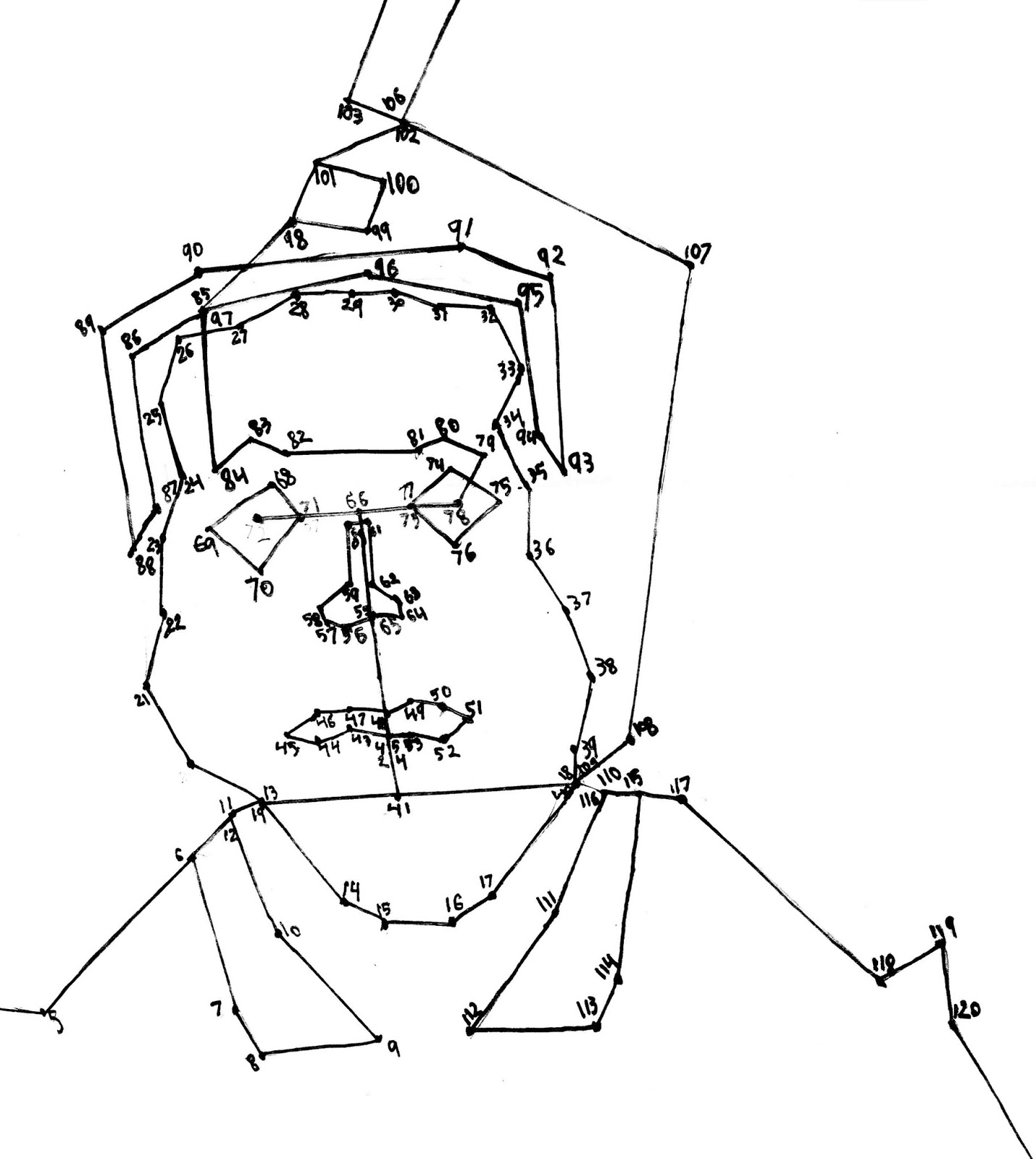
Oscar produced this self-portrait during his art classes at high school this year

Apparently it was his idea to use only straight lines and it's a distinct result.

Bad Horsie Billy by Neve

Clearly Neve is signifying Billy is bad because he smokes a pipe

Mona Lisa remix by Neve

From the school work Neve has brought home at the end of the year

Double double entendre

Most writers can manage a double entendre but it's exceptional to slip two into a single headline

Visit to Lake Cowal

It was exciting to visit the "heartland" of the Wiradjuri Nation today, which required driving through water over the unsealed road.

I'd been interested in seeing Lake Cowal after meeting Uncle Neville "Chappy" Williams at Burning Seed and hearing about his efforts to stop mining at the site.

The mining is extensive and is in an area rich with Wiradjuri artifacts, including scar trees and ovens and a burial site.

This image shows a high-watermark on a tree near the Lake.

Glam And Cheese with Kimchi


The second toastie shared by Glam & Cheese sees Ash and Chase joined by Tania, who brings the spice.

Flashback to Henham Rd

Thought this photo at The Irrigator looked familiar

I took it in 2014!

Interstate guests for Remarkable Sandwiches


One of the highlights of Burning Seed this year was meeting the Glam n Cheese crew.

Chase and Ash of Glam n Cheese Toasties agreed to share their herb butter recipe.

Vote 1 Neve

Gratitude

As a kid I would ask my father if we could celebrate Halloween and he'd scoff, saying something about it not being an Australian tradition. 

If I could go back to that conversation I'd point that out he was born in North America.

Now that I have kids I celebrate Halloween with them and it seems to be increasingly part of the Australian calendar. It seems to me an opportunity to meet neighbours.

Another celebration that Australia needs is Thanksgiving.

It would be good to promote thoughts of gratitude and sharing a meal.

Scarred tree

Many scarred trees can be seen in the Riverina.

Hadn't noticed this one until roadworks included removing the trunk in the foreground.

I'd like to learn more about how to identify them, as well as recognising the tools used to make them.

Kraken comic

There are few regrets after Burning Seed but the habit of hugging people at the event is sorely missed afterwards.

I find myself wrapping arms around people and then registering their surprised look.

Remember...

I like the clever way this comic pokes fun at the use of V for Vendetta masks by protestors who seem to have been quickly distracted.

It also speaks to me of the ease at which online technology does become distracting.

There was a study I read about that looked at the phenomena of walking into a room and forgetting why one went there.

I think there's a similar process at work when we open an internet browser.

Neve's The Last Fart Bender

The latest etching on the kitchen table by my daughter is this representation of her younger brother.

He wasn't impressed but I am. It's a good likeness.

Whale snap


Observing #metoo with respect

Maybe it's too early to say but last October felt important.

At the beginning I was at Burning Seed and interested in the conversations about when an eleventh principle needed to be added to those that guide the event.

One speaker at a Town Hall meeting said it should be called Radical Respect and acknowledge issues of consent.

It became a topic I raised in conversations throughout Seed. Many women I spoke to thought it was a good idea, in contrast some men suggested it shouldn't be enshrined.

I could see both perspectives. On one hand it's important to promote consent and to frame it within a broader discussion of respect; while on the other hand, it's the case that most people are already respectful and ensuring consensual relations with each other.

It was said that making respect a principle risked looking like a nanny.

Then came #metoo and it was a shock to see many women I know shared experiences of times when consent and respect were lacking. The volume and details in these accounts were powerful.

It demonstrated clearly that society does need to be reminded to respect individual autonomy.

The #metoo discussion varied from women recalling hearing catcalls while still children, through to accounts of rape.

There was an outpouring of grief and also support, the latter valuable as social media does not offer mechanisms beyond audience reactions to address mental health.

Then men joined the conversation with their own examples of feeling like victims, again ranging from sexual harassment to rape.

But then I feel it became even more remarkable when I saw a few men I know acknowledging on Facebook that they had been part of the problem.

These blokes reflected on times when they hadn't respected a woman's autonomy and I feel that it showed how powerful the conversation had been, as well as the potential for it to have broader impact if the reflections I'd seen from older men and women reached a younger audience.

The thing that gave a surprising resonance in these conversations was when one friend recounted times when she'd been abused by strangers in public and the lack of response from passing men.

She illustrated her #metoo post with this graphic, which I assume must be from a Burner website as it proposes the 11th Principle should be Consent.

I like the phrase Radical Respect as it opens a broader topic in addressing interpersonal relations. As you can above, I used the term when I was looking for a phrase to embroider at a workshop recently.

It would be good to see the conversation continue, both within the Burner community and more widely in society.

Octopussy

Masami Teraoka, “Sarah and Octopus/Seventh Heaven” (2001)

Mugwort

This leafy shrub has contributed to many amazing dreams over the years.

If you use it instead of hops in beer, then it creates a light and euphoric drink.

It's also good infused in boiling water as a tea.

Need an alibi?

My partner is fond of joking that Mark Lehman sells alibis, since he's in the business of fabrication and maintenance.

So, if you're in Leeton and you need a cover story, maybe he can help.

Reflecting on Streams

One of the highlights of opening the Crossing Streams exhibition was learning a new word.

Ekphrasis is a Greek term for a literal description, particularly in poetry, of the narrative in visual art. So I’d guess that the responses to haiku describing scenes local to Narrandera, that were then interpreted with photography and music is a kind of inverted ekphrasis.

This was part of the writing workshop led by Dr Greg Pritchard, who had contributed to both Crossing Streams and the exhibition Slow Book Haiku that his collaborator Kelly Leonard had brought down from her home Mudgee after the works had been part of the Bring To Light Projects show in Dubbo.

I really appreciated Kelly’s interest in exhibiting in Narrandera at the Arts and Community Centre is a large venue with two rooms. There had been times when I doubted whether the exhibition I’d been asked by Western Riverina Arts to curate would manifest.


However, the exhibition slowly snowballed from unattended workshops, to around one and half dozen haiku, to over 70 tracks from musicians around the world that provided over five hours of music. For this I am grateful for the support of Marco from Naviar Records and also Marc from the Disquiet.com blog, whose Junto joined the fifth poem as one of their weekly projects.

Five hours is an almost perfect amount of soundtrack as the that’s how long the exhibition is open each day until 29 October, ensuring most tracks will be heard daily. The music contributed can be heard in the gallery and also available for perusal on an iPad with headphones.

Another highlight of the opening was hearing Lizzie Walsh and Mary Sutcliffe performing composer Fiona Caldarevic’s 'The River's Edge,' a response to a haiku by Sue Killham. Fiona contributed musical responses to each of the five poems shared by Naviar Records and they were all of a high quality and distinct among the mostly electronic contributions.

The process of curating an exhibition was one that required me to rethink my approach. In my previous exhibitions the focus had been on my role as photographer. While I contributed photography, as well as video and haiku, the idea of being a curator seemed to be one that needed an outward and collaborative focus.

While we were installing, Kelly had mentioned that this would be the first time Greg saw their work. It seemed incredible but somehow made sense given Greg’s frequent transient roles travelling between arts communities and making connections.

In the artist talk Greg told how their project had begun with a handwritten note on handmade paper from Kelly that invited him to collaborate. It said a lot about her style. I’ve really appreciated her enthusiasm for this exhibition and am excited about the idea we have to collaborate again.

It has been fascinating to see how a short poem can be interpreted sonically and the variety of the contributions provides a rich experience in comparing and contrasting individual approaches.

I was also happy to see the variety of people attending and engaging with the exhibition. At one point I passed two women considering the meaning of the word ‘verdant’ and, after reaching for their phone to check, learned it means green. That they didn’t shrug and move on showed their interest.

Crossing Streams has been a rewarding experience for me and I am grateful to Western Riverina Arts for the opportunity, as well as the photo above. Before it concludes on 29 October there are workshops on Sundays from 1pm, with Peita Vincent discussing writing then Kelly introducing weaving techniques.

The River's Edge


A highlight of the opening of the Crossing Streams exhibition was this performance of 'The River's Edge,' which was Fiona Caldarevic's musical response to this haiku by Sue Killham.

The more of your data I gather


Conversing Streams

While approaching musicians to ask them to make their responses to the haiku in the Crossing Streams project available for the exhibition, I had an interesting conversation with one who questioned whether it was appropriate for a non-indigenous person to comment on (what they saw as) indigenous history.

They wrote:
If it’s OK, can I ask a few questions regarding the exhibition? I thought about this for a while after the actual Junto, but are any of the people involved in the event indigenous? Or even the writer of the original haiku?

I ask because the prompt is using the lived experience of that group of people and I feel like it’s sort of weird for me to have even participated, being a well-off non-oppressed guy.

My reply:
Poison Waterholes Creek…is one of 14 poems that will be exhibited, along with around five hours of music. 
That poem was written by a friend who is very conscious of local history and my initial response was that I liked my poem about that location better because it didn’t open old wounds. 
Then I had to remind myself that I want to engage people but, more importantly, I read a column by Stan Grant where he talked about the need to break the silence surrounding the Frontier Wars. 
Stan’s father is a senior Wiradjuri elder and lives in Narrandera, while Stan Jr has also become a prominent voice in the process of reconciliation that Australia is going through. 
I think it’s an important conversation, particularly as increasing numbers of Australians identify as indigenous. 
It’s been really rewarding for me to see the discussion in the responses to the Junto, particularly those people who’ve gone and looked into Wiradjuri culture or found parallels with indigenous people in their own locations. 
Sometimes I think on how I can claim to be a first-generation Australian and how that is convenient when it comes to excusing myself from reconciliation. 
However, I am increasingly seeing the need to play role… So I’ve begun taking the opportunities to promote the conversation and it’s developed over the last six months while I’ve been thinking it through. 
Small things seem important, like reminding people of the treaty that was thought to have been negotiated nearby in the early 19th Century. As the national discussion about a treaty continues to be muffled by other issues, it’s good to remind people that it’s not something new.

Crossing Streams with Slow Book Haiku

What would Jesus wear?

In recent times the same-sex marriage survey has thrown up some interesting conversations, like the one about how the 'yes' vote will lead to boys being dressed in dresses.

So it seemed a good time to return to the question: What Would Jesus Wear?

While some might question Jesus' fashion choices, there's no doubting his achievements.