I don't understand the effect that the film Big Fish has on me.
Tonight I watched it again. Actually, it was more like I half-watched it. But as soon as they start talking about going to the river, I start crying.
My son was watching it with me, interrupting to talk about playing Zelda after the film and he said he started crying too. Then as the credits role we're both acting like nothing happened.
It seems we were both allowing our attention to drift away from watching Big Fish yet it managed to extract moisture from our tear ducts in final scenes. It's quite magical to me how it can do this but so is the film I guess. There are many memorable images in it, yet they're vaguely familiar. Maybe it's the symbolism?
One of the things that resonates for me while watching Big Fish is that it's a film about becoming a father and how it changes your own relationship with your father. This is one of the best things about having kids for me because I found I could let go of a lot of angst once I started to see things from the viewpoint of being a parent.

Future of cinemas
Wagga's Daily Advertiser has a piece today on the challenges faced by cinemas seeking to stay current by moving to digital projection.
In my opinion, the real challenge for cinemas is to ensure future generations continue to seek entertainment in their darkened halls. Digital distribution is already benefiting these consumers, who are finding it much quicker and cheaper to download the same content and watch it in home cinemas.
However, digital projection offers cinemas the chance to greatly expand the services they offer. How about watching the Olympics in real-time away from the crap atmosphere of a pub? How about becoming a venue for digital games? How about becoming the place where local content producers premiere their work?
This last idea is something I think I'll pursue to launch my forthcoming album of Leeton park remixes.

Man of Steel on The Iron Lady

Former Prime Minister John Howard wrote a review of the film The Iron Lady that was published in the Australian Financial Review (AFR) last week and I was entertained by this typo where 'retelling' appeared as 'retailing'. It seemed a sly dig at how the film uses a public figure to generate interest in a story that focuses on bigger themes than the career of Margaret Thatcher. The film made me consider that idea that women can have a career or a family and I think this is as much a focus as the actual career of Thatcher.
The more I thought about Howard's review the more I thought he'd missed a lot in the film. I can understand why he wasn't impressed with its portrayal of Thatcher, because The Iron Lady focuses more on how age has inevitably taken a toll on the once formidable politician. Howard mentions more than once the time he'd spent with Margaret and her husband Denis, as well his admiration for her career but I guess the reviewer might also be a bit unsettled by how he could similarly be portrayed. There are parallels to be drawn between both prime ministers -- aside from metal references as Howard was christened a "man of steel" by US president George W. Bush.
Howard argues there's "a broad ideological context in which the film can be viewed" and links it to criticism of Thatcher from "the progressive left," which is a label that probably applies to my political leaning. I left the film with more admiration of Thatcher's achievements than when I entered but ultimately it is a film and the representation of history must fit within a specific narrative.
At uni I learned that all histories are stories and one should be alert to plot devices which make them effective. This is where I think Howard fails as a film reviewer because he criticises the storytelling for being inaccurate when it obviously is looking for a different audience than that of a documentary and needs to shoehorn historical fact into a three act structure. It was interesting to me that the AFR's Review section which featured Howard's review on the front page had a line on the back page that "a great novel can take implausible fact and turn it into entirely believable fiction" because this also applies to film.
It should be noted there's a broad commercial context in which the film can be viewed too. I'd guess the success of The Queen led to producers cast about for similar subject matter and this contributed to the production of The Iron Lady.
The great leveler
I like the following from The Masonic Myth by Jay Kinney:
The Web, in its role as the great leveler, has rendered any site as more or less equal to any other site, undermining the former barriers and distinctions between "official" and "alternative" realities. This has contributed to the present juncture's unique psychological state in the population at large -- a mixture of expectation and dread that might be characterized as the mainstreaming of paranoia.
What's so secret about the ACTA?
On Friday night a mate spruiked on Facebook this video he had edited together by taking footage from a B-grade horror movie and a soundtrack by Queens of the Stone Age:
On Saturday I started thinking about how out of touch copyright is with what people are doing these days. I mean, Australia's copyright laws were way behind people copying their CDs to put on their iPods and now it seems like everyone is making a mash-up of some kind.
The thing is that copyright seems to be getting longer and laws are getting tougher and this effectively turns people like my mate into criminals.
One of the interesting things in WikiLeaks' cables has been the repeated demonstration of the importance attached to intellectual property interests by US diplomats. The Anti-Counterfeiting Trade Agreement (ACTA) is the latest push by the US to get countries around the world to tighten copyright and I've been shocked to see Australia sign up without any sort of debate in parliament.
Basically we're seeing a policy developed by lobby groups go straight past democratic process to get a few steps from becoming law.
It goes further than my mate editing videos, it means Australia will rely on imported intellectual property and will be tied to using it in the way dictated by corporations. Think of Monsanto as having a greater say in your life than your local member of parliament.
Australia signed the ACTA agreement on 1 October 2011. Here are a couple of comments on ACTA from Wikipedia:
While Australia rolled over for the US, Europeans have shown more spine:
I'll try to leave aside my usual complaints about copyright but it's worth reflecting on the massive increases in copyright extensions that have been made in recent decades. Copyright now extends about a lifetime after the death of the author, so you can hardly justify the protection of creative works as being for the benefit of the creator. Laws are meant to reflect public opinion and, as mentioned, I think copyright laws don't reflect how the public use copyrighted material.
Copyright rant aside, it's still a shock to see the way lobbying shapes political processes. I believe it's even more worrisome in the light of recent protests against the Murray Darling Basin Authority's draft plans. These will impact greatly upon the cost of food in Australia as well as future food security and they can be linked to signing the Ramsar treaty and other international agreements.
ACTA might seem like a small matter and the trade minister might say there's no requirement to change domestic laws but the truth is that these treaties are the thin edge of the wedge when it comes to influence upon Australian laws and lives.
On Saturday I started thinking about how out of touch copyright is with what people are doing these days. I mean, Australia's copyright laws were way behind people copying their CDs to put on their iPods and now it seems like everyone is making a mash-up of some kind.
The thing is that copyright seems to be getting longer and laws are getting tougher and this effectively turns people like my mate into criminals.
One of the interesting things in WikiLeaks' cables has been the repeated demonstration of the importance attached to intellectual property interests by US diplomats. The Anti-Counterfeiting Trade Agreement (ACTA) is the latest push by the US to get countries around the world to tighten copyright and I've been shocked to see Australia sign up without any sort of debate in parliament.
Basically we're seeing a policy developed by lobby groups go straight past democratic process to get a few steps from becoming law.
It goes further than my mate editing videos, it means Australia will rely on imported intellectual property and will be tied to using it in the way dictated by corporations. Think of Monsanto as having a greater say in your life than your local member of parliament.
Australia signed the ACTA agreement on 1 October 2011. Here are a couple of comments on ACTA from Wikipedia:
Since ACTA is an international treaty, it is an example of policy laundering used to establish and implement legal changes. Policy laundering allows legal provisions to be pushed through via closed negotiations among private members of the executive bodies of the signatories. This method avoids use of public legislation and its judiciary oversight. Once ratified, companies belonging to non-members may be forced to follow the ACTA requirements since they will otherwise fall out of the safe harbor protections. Also, the use of trade incentives and the like to persuade other nations to adopt treaties is a standard approach in international relationships. Additional signatories would have to accept ACTA's terms without much scope for negotiation...
Newspapers reported that the draft agreement would empower security officials at airports and other international borders to conduct random ex officio searches of laptops, MP3 players, and cellular phones for illegally downloaded or "ripped" music and movies. Travellers with infringing content would be subject to a fine and may have their devices confiscated or destroyed.
While Australia rolled over for the US, Europeans have shown more spine:
Kader Arif, European rapporteur for ACTA, subsequently resigned from his position on 26 January 2012 saying "I want to send a strong signal and alert the public opinion about this unacceptable situation. I will not take part in this masquerade."
On 3 February 2012, Poland announced it halted the ratification process as it "had made insufficient consultations before signing the agreement in late January, and it was necessary to ensure it was entirely safe for Polish citizens."
I'll try to leave aside my usual complaints about copyright but it's worth reflecting on the massive increases in copyright extensions that have been made in recent decades. Copyright now extends about a lifetime after the death of the author, so you can hardly justify the protection of creative works as being for the benefit of the creator. Laws are meant to reflect public opinion and, as mentioned, I think copyright laws don't reflect how the public use copyrighted material.
Copyright rant aside, it's still a shock to see the way lobbying shapes political processes. I believe it's even more worrisome in the light of recent protests against the Murray Darling Basin Authority's draft plans. These will impact greatly upon the cost of food in Australia as well as future food security and they can be linked to signing the Ramsar treaty and other international agreements.
ACTA might seem like a small matter and the trade minister might say there's no requirement to change domestic laws but the truth is that these treaties are the thin edge of the wedge when it comes to influence upon Australian laws and lives.
In the US, ACTA was dubbed an "executive agreement" rather than a "treaty," which allowed negotiators to skip the ordinary Senate ratification process. If ACTA becomes a binding part of international law, it will create a precedent for future treaties that avoid basic principles of transparency and democratic accountability.
100 Notions from a Nation of Two
This exhibition at the Wagga Gallery looks tops.
I've been a fan of the McEwans' work running The CAD Factory after visiting to see and hear Bruce Odland's installation and performance last year.
These sorts of collaborative processes are always fascinating. I've been involved in few, most recently the Ninja Remix Chain and Cut & Run project. The thing I like best is the sense of dialogue but it's also good to observe the characteristics of the response and consider what motifs and themes the participants use.
Watching the Watchmen

There's an irony in the news that DC Comics are producing seven prequel comics based on the Watchmen series developed by Alan Moore and Dave Gibbons.
According to the Wikipedia entry on Watchmen Moore first developed the story based on some out of date characters DC Comics had bought. The company baulked at the idea of potentially destroying these properties, so Moore and Gibbons created new characters. The story of Watchmen even seems to acknowledge this as it's a story featuring the children of superheroes.
In hindsight it's quite funny that these substitutes are getting a new lease on life when the originals were denied one.
Alan Moore lands a blow in saying "I tend to take this latest development as a kind of eager confirmation that they are still apparently dependent on ideas that I had 25 years ago."
I'm happy to reserve judgment on the new prequels until they garner enough critical praise that I feel the need to read them.
The Watchmen movie was fun and the original comics were extraordinary when they first came out but have dated. You really get a sense of the Cold War climate when reading them now and the innovation of adult themes in comic books isn't remarkable anymore.
Alan Moore, however, continues to amaze and surprise me -- most recently with Neonomicon, which has the dubious distinction of perverting the work of HP Lovecraft.
Happiness is ripe tomatoes

I love the smell of ripe tomatoes. If they could bottle that scent then I'd consider wearing it.
Looking forward to making brushcetta with these tomorrow.

Secondhand games and new consoles
Aside from Zelda Twilight Princess (completed yesterday), I've been buying a bunch of cheap secondhand Gamecube games.

This copy of Shrek 2 was one I bought since it's multi-player and suitable for my kids. I was surprised to find the copy that arrived was a new game and still in shrink-wrap.
It's the first new game I've bought in nearly six years of owning a secondhand Gamecube and it seemed an interesting coincidence that it arrived in the same week as reports that the next generation of consoles may not allow secondhand games.
I can understand that the companies who make games might be upset they don't receive money from these ongoing sales, after all it's an issue that artists have had to deal with -- don't you think Van Gogh would've liked to see some of the money his paintings now earn?

Look at the price on this game pictured above and consider that I paid one-tenth of this price on Ebay (again because it's a multi-player game suitable for my kids). Now consider I could've bought the game for a third of what I paid if I downloaded Super Monkey Ball 2 onto my Apple device.
On one hand I think it's really petty to limit consoles so they won't play secondhand games. It limits the functionality of the device and this will frustrate users. On the other, I can see this is a paradigm shift in terms of how content is delivered. Physical objects are giving way to digital information and I like Jeremy Denk's assessment on his blog.
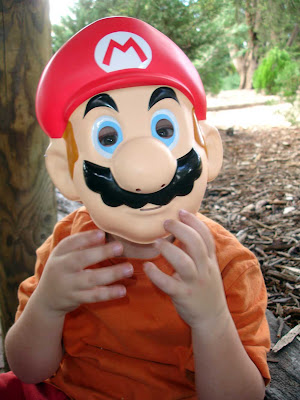
While Nintendo could complain that I've bought a lot of their gear secondhand, it's been something of a gateway drug and has introduced my family to their intellectual property. Just look at the joy we got from Mario for one example.

This copy of Shrek 2 was one I bought since it's multi-player and suitable for my kids. I was surprised to find the copy that arrived was a new game and still in shrink-wrap.
It's the first new game I've bought in nearly six years of owning a secondhand Gamecube and it seemed an interesting coincidence that it arrived in the same week as reports that the next generation of consoles may not allow secondhand games.
I can understand that the companies who make games might be upset they don't receive money from these ongoing sales, after all it's an issue that artists have had to deal with -- don't you think Van Gogh would've liked to see some of the money his paintings now earn?

Look at the price on this game pictured above and consider that I paid one-tenth of this price on Ebay (again because it's a multi-player game suitable for my kids). Now consider I could've bought the game for a third of what I paid if I downloaded Super Monkey Ball 2 onto my Apple device.
On one hand I think it's really petty to limit consoles so they won't play secondhand games. It limits the functionality of the device and this will frustrate users. On the other, I can see this is a paradigm shift in terms of how content is delivered. Physical objects are giving way to digital information and I like Jeremy Denk's assessment on his blog.
While Nintendo could complain that I've bought a lot of their gear secondhand, it's been something of a gateway drug and has introduced my family to their intellectual property. Just look at the joy we got from Mario for one example.


Saul Bass
Since reading this article on Saul Bass' role in the famous shower scene in the film Psycho by Alfred Hitchcock, I'd been looking for a book on his work. With money I got from my mum at Christmas I ordered this excellent book on Saul Bass, which arrived yesterday.

Haven't read much of it yet but am really taken with this design he made for the opening titles of Carmen Jones, which can be viewed below.

Haven't read much of it yet but am really taken with this design he made for the opening titles of Carmen Jones, which can be viewed below.

Australia Day

January 26 is Australia Day by virtue of being the date the First Fleet landed in 1788 and it's undergone a transformation in the last couple of decades. For a long time it was significant to me because it was the date of the Big Day Out concert in Sydney and I recall that when The Disposable Heroes of Hiphoprisy played in 1993 they described it as Invasion Day and the label sorta stuck for a while.

Sometime in the late '90s I noticed this trend at the Big Day Out in Sydney for people to wear the Australian flag as a cape. If I were more patriotic I think I'd find this fashion to be disrespectful but, judging by the crass Australian-themed consumerism in my letterbox recently, there must be a number of people grateful this now exists as a product.

Frankly I'm amazed at the amount of stuff branded with the national flag and/or some underwhelming patriotic slogan. The irony is that most of it probably isn't manufactured in our country, so buying Australian must mean supporting some sweatshop somewhere else and contributes to our trade deficit or something.

I am grateful that the print advertisements for the public holiday that started under the Howard government have stopped though. They had these meaningless statements about the public holiday inferring a right to eat meat products prepared in a carcinogenic manner or a right to wear thongs. At many levels these seemed offensive since it was an example of Australians taxes being spent on trivial advertising and our country doesn't actually have a bill of rights.

Don't get me wrong, I love being Australian and living in this country but fervent nationalism should have no part in it.
I am grateful to have met Storry Walton, who shared with me a story of how his grandparents taught him to distinguish between love and pride for your country. They said you should love Australia like you would your child because it meant recognising your country can be wrong and require criticism, whereas pride was blind in allegiance.
Storry told me that as a child in Perth his Irish grandparents wouldn't stand for the national anthem. They said they'd seen enough death caused by national pride and felt strongly enough about this that they endured abuse for this belief.
Swingeing back from the dead

Flicking through the Sydney Morning Herald today I was sure I'd spotted another example of the decline in sub-editing to publish here under the 'war on error' tag but in turns out that swingeing really is a word.
And, more interestingly for word nerds like me, it's an archaic word that appears to be coming back into contemporary use. In fact The Economist predicted "swingeing will appear in at least one news headline a week for the rest of the year" more than a year ago but that probably shows how behind Australia is in the latest trends or maybe even how little I read.
For a while now I've thought we are living in an age of declining literacy, even going so far as to write that literacy is dead. It's more appropriate to acknowledge that the nature of literacy is changing to reflect the digital age.
So now I propose we celebrate the continued employment of verbose sub-editors, the longevity of literacy and the opportunity to learn a new word!
Centenary of Leeton
For a while I've nurtured the idea of remixing a location and with the centenary of Leeton being celebrated later this year I decided to develop an album based on sounds recorded at the playgrounds in the town.
Being a parent and an audiophile I've spent a lot time tapping slides and swings -- but I should be careful saying that aloud because people are paranoid about other types of 'philes at playgrounds!
This video shows part of the song I created from sounds recorded at Mountford Park, which is at the heart of the town both literally and metaphorically. It's a wonderful green space with a large playground, as well as an aviary and stage that's the focus of many events.
The idea of taking everyday noises as music has a long history but my inspiration comes from the Italian Futurists, particularly the Art of Noises manifesto written by Luigi Russolo.
Aside from being a potent document, I think this is a cool reference as it comes from around the time when the Murrumbidgee Irrigation Area was first proposed and they both share a similar sense of the excitement of the Modern age.
A couple of other influences were reading about the album Pink Floyd originally planned to record as a follow-up for their landmark Dark Side of the Moon, and; Matthew Herbert, particularly his Bodily Functions album.
I started making videos to accompany the songs I've created from Leeton's playgrounds after getting feedback from people that they couldn't see how I'd processed the sounds. You can read more about the park remix project at my bassling blog and there are videos for other parks and some unprocessed sounds also at the bassling YouTube channel.
My aim is to edit together an audio-visual mix made from all of the tracks to launch the album in the second half of the year. Not sure of the venue at this stage but I'm open to be part of another event if the Centenary Committee are keen or maybe have an outdoor launch with the projector and sound system I used to screen Metropolis for the 2011 Art Deco Festival.
I love Zelda

One highlight of my summer has been avoiding the hotter days by staying indoors and playing Twilight Princess on my Nintendo Gamecube. Yeah, I'm old school like that -- playing a game that's more than five years old on a superseded console.
This is the second Zelda quest I've undertaken. The first was Wind Waker, a charming cartoony game that I've since learned was a radical departure from the Zelda franchise but popular enough to spawn two sequels on the Nintendo DS Lite.
The Zelda games are a popular Nintendo property but seem to be little-known among non-gamers. Zelda does not have the same brand recognition as Mario or Donkey Kong and this is probably because she's something of a secondary character. You never actually play the character of Zelda, except in the game Super Smash Brothers Melee -- which is a great multi-player game where all of the Nintendo characters battle it out.
Twilight Princess has the familiar narrative that unfolds as the central character reaches the rite of passage where he is given the green hero outfit and undertakes a quest to save his kingdom. The character can be seen as a version of the green man, a symbol of rebirth or maybe eternal youth like Peter Pan.
There are little variations between the games of course, particularly in the equipment found along the way. The twilight in Twilight Princess seems a dated twist though, reminding me of The Matrix but maybe also the nothingness in Neverending Story or possibly the end of the world in this Madonna song.
A couple of things I've noticed in Twilight Princess have got me wondering about messages in the game, probably because as a former cultural studies student I seem to over-analyse everything.
Are there messages in the game? For example, often it's easy to avoid fighting all the monsters. Many times I've found it easiest to just run away and, usually, the monsters don't bother chasing. I like to think it's a lesson for players that confrontation can be avoided. This seems to be emphasised in that you don't get points for killing things. In fact, you don't get points at all. The key objective is to overcome various challenges along the way.
The other lesson that I like to think is in the game, is the way that you very quickly fill your purse and are unable to keep collecting the gems which are used as currency. This seems to me to be a message that making money isn't the goal, again reinforcing the view that you need to succeed at the objectives required to fulfill the quest. Money is means to achieve your goals, not a goal in itself.
This focus on achieving your goals rather than seeking confrontation and collecting money seem to me to be a good philosophy to impart and one of the reasons why I enjoy sharing Zelda with my kids.
Subscribe to:
Posts (Atom)